-24125.png)

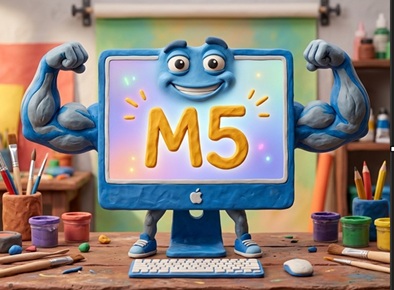
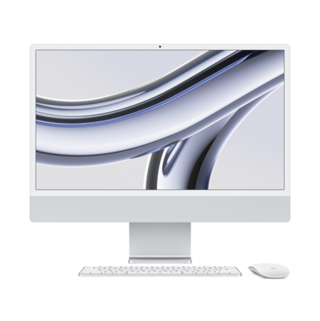
For years, the iMac has quietly remained one of Apple’s most underrated machines. While MacBooks dominate coffee shops and offices, the iMac still offers one of the cleanest all-in-one desktop experiences available — especially for home offices, creatives, students, and businesses.
Now, with rumours building around a future M5-powered iMac, the refurbished Mac market could be about to enter another major upgrade cycle.
According to multiple reports and leaks, Apple is expected to continue expanding its M5 Mac lineup through 2026, with the iMac heavily tipped to receive the next-generation chip.
And while most headlines focus on performance gains and AI features, the real story for many buyers may actually be what happens to the refurbished market afterwards.
Why the M5 iMac Matters
Apple’s move to Apple Silicon completely changed the Mac landscape.
The jump from Intel to the M-series chips delivered:
- Huge efficiency improvements
- Near-silent operation
- Lower power consumption
- Longer software support
- Dramatically better performance per watt
Even older M1 and M3 Macs still feel extremely fast today.
The expected M5 iMac is likely to continue that trend, with reports suggesting Apple is heavily focusing on AI performance, graphics acceleration, and improved memory bandwidth across the M5 range.
For consumers buying new, that means another leap forward.
For the refurbished market, it means something equally important:
A new wave of trade-ins.
The Refurbished Market Always Follows Apple’s Upgrade Cycles
Every major Apple release creates a ripple effect.
When new Macs launch:
- Enthusiasts upgrade first
- Businesses begin phased refreshes
- Creative professionals rotate equipment
- Older but still highly capable machines enter the secondary market
That is exactly why refurbished Macs have become such a strong value proposition over the last few years.
When the M1 launched, Intel Mac prices dropped sharply.
When the M3 generation appeared, M1 and M2 machines became some of the best-value computers available.
The same thing is likely to happen again with the M5 iMac.
Why Refurbished iMacs Could Become Even More Popular
A brand-new iMac is not cheap.
As Apple pushes higher-end AI hardware and faster chips, prices across the Mac range continue creeping upwards. Recent M5 MacBook launches already showed price increases in some configurations.
That creates a widening gap between:
- Buyers who want the newest hardware
- Buyers who simply want a fast, reliable Mac
For many users, a refurbished M1, M3, or M4 iMac will still offer more than enough performance for:
- Office work
- Video calls
- Web browsing
- Adobe Creative Cloud
- Music production
- Light video editing
- Education
- Small business use
And that is where refurbished specialists like Tech.Trade become increasingly important.
Apple’s AI Push Could Extend Mac Lifespans
One interesting development with the M5 generation is Apple’s increasing focus on on-device AI.
Apple says its latest M5 chips deliver major AI performance improvements thanks to upgraded Neural Engine architecture and GPU enhancements.
Ironically, this may actually strengthen the refurbished market rather than weaken it.
Why?
Because Apple Silicon Macs age far better than Intel Macs ever did.
Even first-generation M1 systems still outperform many modern Windows laptops in everyday use. That means refurbished Apple Silicon Macs may remain viable for far longer than previous generations.
For buyers, that creates confidence:
- Longer usable lifespan
- Better resale value
- Lower depreciation
- Strong software support
Businesses Are Also Driving Demand
The refurbished market is no longer just for budget-conscious consumers.
Many businesses now actively prefer refurbished Macs because they:
- Reduce capital expenditure
- Lower e-waste
- Provide excellent performance-per-pound
- Fit sustainability targets
As newer M5 iMacs arrive, many existing fleets of M1 and M3 Macs will likely re-enter the market in excellent condition.
That could create one of the strongest refurbished desktop markets Apple has seen in years.
Should You Wait for the M5 iMac?
That depends entirely on your needs.
If you want:
- The latest AI capabilities
- Maximum future-proofing
- The newest Apple hardware
…then waiting for the M5 iMac could make sense.
But for many people, the smarter value option may actually be the opposite:
- Buy a refurbished Apple Silicon iMac after the M5 launches
- Let early adopters absorb the depreciation
- Get 80–90% of the experience for significantly less money
That has always been the hidden strength of the refurbished Mac market.
Final Thoughts
The upcoming M5 iMac is shaping up to be another important step in Apple’s desktop evolution.
But beyond the headlines and benchmarks, its biggest impact may actually be on the refurbished ecosystem that follows behind it.
As newer Macs arrive, older Apple Silicon machines become even better value — giving buyers access to premium hardware at far more affordable prices.
For consumers, businesses, and students alike, that is exactly why refurbished Macs continue to grow in popularity.
And with the M5 era approaching, the next wave of great-value refurbished iMacs may not be far away.